In 1919, the Bauhaus challenged the way the world understood design. It rejected the rigid separation of art, craft, and technology, bringing them together under one radical idea: Design becomes more powerful when disciplines work together.
From typography and furniture to architecture and industrial production, Bauhaus was never simply about making things look better. It was about uniting form and function, craftsmanship and technology, aesthetics and purpose.
Its philosophy went on to shape the history of modern design. Yet, more than a century later, the tools we use to design have taken a different direction. Graphic design, UI/UX, animation, industrial design, architecture, and engineering have evolved into specialised disciplines, supported by technologies that often operate in isolation.
Multidisciplinary Design Is Not a New Trend
Consider a real design project. A graphic designer developing a brand identity may explore photography, typography, packaging, illustrations and digital interfaces. An architect may study space, materials, textures, and engineering. An industrial designer may combine manufacturing, visual aesthetics, and mechanical principles with architecture.
These disciplines are specialised, but their process often overlap. A visual reference discovered during architectural research might inspire a product form. A graphic composition might inform the interface of a digital product and an engineering solution might influence the aesthetics of an industrial design.
Multidisciplinary design connects all other disciplines to create better products, brands and outcomes.
In his essay, When Did Design Stop Being “Multidisciplinary"?, Jarrett Fuller examines the separation of design into specialised disciplines.
Read the original essay: https://jarrettfuller.com/projects/multidisciplinary
The Problem With Fragmented Design Tools
Today's creative professionals often move between multiple technologies and applications to complete a single project. A graphic designer might research references online, create moodboards, develop layouts in design software, edit images in another application, and prepare presentations elsewhere.
UI and UX designers face similar challenges when moving between user research, visual references, interface design, prototyping, and documentation. Architects and engineering designers also work across specialised environments for research, modelling, visualisation, and technical development.
This fragmentation creates unnecessary context switching. References become scattered, research loses its connection to execution, and creators spend time managing tools instead of developing ideas.
The problem is not that specialised technologies exists. It is that the overall design workflow often lacks continuity.
Creative Intelligence: Connecting Ideas Across Disciplines
Creative Intelligence is the ability to generate ideas, recognise patterns, explore alternatives, and connect concepts in unexpected ways.
A graphic designer might find inspiration in architectural geometry. An architect might study natural structures to explore sustainable forms. An industrial designer might draw from automotive engineering to improve product ergonomics. A filmmaker might use principles of graphic composition to strengthen visual storytelling.
These connections demonstrate how creative thinking extends beyond the boundaries of individual professions.
AI powered visual research can help creators explore these relationships by making it easier to discover references, compare visual approaches, and investigate unfamiliar creative territories.
At Creatvise, we see technology as a way to support creative exploration, not replace human imagination or judgement. The objective is to help creators spend less time searching through fragmented resources and more time developing meaningful ideas.
The Multidisciplinary Design Platform
Creatvise is building a multidisciplinary design intelligence that brings design workflows into a more connected experience across disciplines. Our philosophy is simple: tools should protect design creation flow, not interrupt it.
Different designers need different capabilities, but their work often begins with the same activities: finding references, researching possibilities, comparing visual directions, and developing ideas.
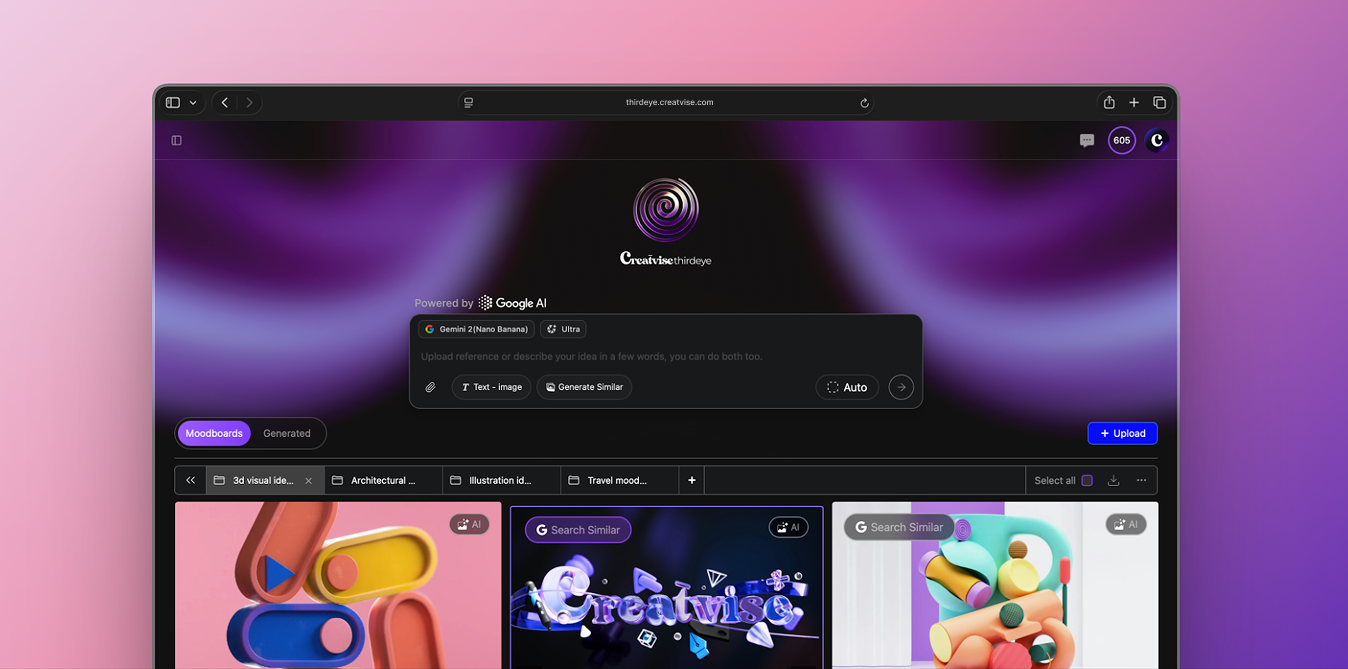
Creatvise Thirdeye addresses this early stage through AI powered visual research, reference discovery, and moodboarding. Creators can upload a visual, discover related inspiration, explore similar references, and organise their findings into structured moodboards.
For a graphic designer, this could mean exploring typography, branding, editorial layouts, and colour systems. For a UI designer, it could mean researching interface patterns, interaction references, and visual hierarchies. An architect might investigate building forms, materials, spatial compositions, and architectural styles. An industrial designer could explore product silhouettes, ergonomics, textures, and manufacturing inspired forms.
The disciplines differ, but the need for effective visual research remains consistent.
Explore Creatvise Thirdeye: https://thirdeye.creatvise.com/
The Future of Design Technology
The future of design technologies should not be measured only by the number of features an application offers. It should also be measured by how effectively it supports the design and creative process across disciplines.
Graphic design, UI and UX design, architecture, engineering design, industrial design, animation, fashion, and interior design will continue to require specialised knowledge. However, the research and discovery processes that support these disciplines offer opportunities for greater connection.
Creatvise is working towards this vision by making reference discovery, visual research, ideation, and moodboarding more accessible starting through Thirdeye.
Conclusion: Creativity Should Move Beyond Silos
Design disciplines may differ in their methods, materials, and outcomes, but they share a common need to research, explore, interpret, create and iterate.
Creative Intelligence helps designers discover new possibilities. Design Intelligence helps turn research into informed decisions. Inclusive Design ensures that different people and their needs remain part of the design process.
At Creatvise, we believe technology should make these processes more connected rather than add more barriers between them.
The future of multidisciplinary design is not about replacing one specialised. It is about creating a more connected creative ecosystem where design can move freely between graphic design, UI and UX, architecture, engineering, and other creative fields.